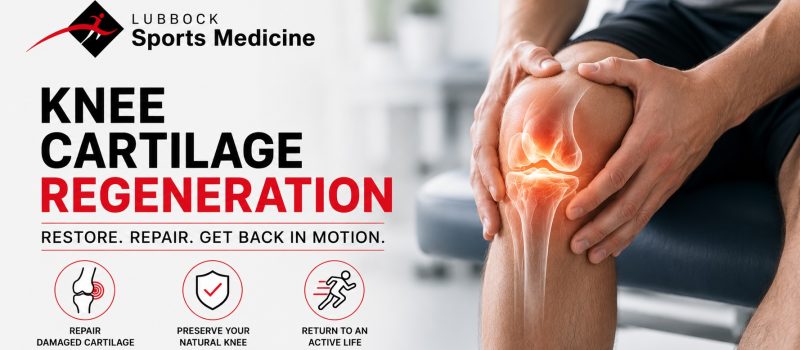
Knee cartilage injuries are one of the most common causes of chronic knee pain, swelling, stiffness, and reduced mobility. Whether the damage results from a sports injury, repetitive stress, or normal wear over time, injured cartilage has very limited ability to heal on its own.
Fortunately, orthopedic medicine has advanced significantly. Today, a variety of cartilage restoration procedures can help preserve the knee joint, relieve pain, and improve function—often delaying or even preventing the need for joint replacement in appropriately selected patients. While “regeneration” does not always mean growing completely new, normal cartilage, modern restorative procedures can successfully repair focal cartilage defects and improve long-term joint health.
Understanding Knee Cartilage
Articular cartilage is the smooth, protective tissue covering the ends of the bones inside the knee joint. This specialized cartilage allows the femur, tibia, and patella to glide smoothly against one another while absorbing tremendous forces during walking, running, jumping, and other daily activities.
Unlike many other tissues, cartilage contains very few blood vessels. Because of this limited blood supply, damaged cartilage has minimal natural healing potential.
Over time, untreated cartilage damage may lead to:
- Persistent knee pain
- Swelling after activity
- Catching or locking sensations
- Decreased range of motion
- Joint instability
- Progressive osteoarthritis
Early evaluation is important because smaller cartilage injuries are often easier to treat than advanced degeneration.
What Causes Cartilage Damage?
Cartilage injuries may develop from several different causes, including:
- Sports injuries
- ACL tears
- Meniscus injuries
- Knee dislocations
- Direct trauma
- Repetitive impact activities
- Joint instability
- Normal age-related wear
Younger athletes often develop isolated cartilage defects following an injury, while older adults may experience cartilage breakdown associated with osteoarthritis.
Can Knee Cartilage Regenerate?
This is one of the most common questions orthopedic specialists hear.
The answer is: it depends on the type and extent of cartilage damage.
Cartilage does not regenerate naturally the same way skin or bone heals. However, modern orthopedic procedures can stimulate new repair tissue or restore damaged areas using advanced biological techniques.
Treatment is highly individualized based on:
- Patient age
- Activity level
- Location of the defect
- Size of the cartilage injury
- Knee alignment
- Presence of arthritis
- Ligament stability
- Meniscus health
Modern Knee Cartilage Restoration Procedures
Today’s orthopedic surgeons have multiple options for repairing cartilage defects.
Microfracture Surgery
Microfracture is a minimally invasive arthroscopic procedure designed for smaller cartilage defects.
During surgery, tiny holes are created in the bone beneath the damaged cartilage. This allows bone marrow cells to enter the injured area and stimulate formation of repair cartilage.
Microfracture can provide meaningful symptom relief in carefully selected patients, although long-term durability may be less favorable for larger lesions or high-demand athletes.
Osteochondral Autograft Transfer (OATS)
For certain patients with focal cartilage defects, healthy cartilage and underlying bone can be transferred from a less weight-bearing area of the knee into the damaged region.
This technique replaces damaged tissue with the patient’s own healthy cartilage and is often considered for smaller, well-defined lesions.
Osteochondral Allograft Transplantation
Larger cartilage injuries may require donor cartilage and bone from a tissue bank.
Fresh osteochondral allografts allow surgeons to restore extensive cartilage defects while preserving the patient’s natural knee.
Matrix-Induced Autologous Chondrocyte Implantation (MACI)
One of the most advanced cartilage restoration procedures available today is Matrix-Induced Autologous Chondrocyte Implantation (MACI).
This treatment involves:
- Harvesting a small sample of healthy cartilage
- Growing the patient’s cartilage cells in a specialized laboratory
- Implanting those cells on a collagen membrane into the damaged area
MACI is FDA-approved for selected symptomatic full-thickness cartilage defects of the knee and has shown favorable long-term outcomes in appropriate candidates.
Biological Treatments That May Support Healing
Depending on the individual case, orthopedic specialists may incorporate biologic therapies to support the healing environment.
These may include:
- Platelet-Rich Plasma (PRP)
- Bone marrow concentrate
- Stem cell-based research applications
- Hyaluronic acid injections
While these treatments may reduce inflammation and improve symptoms in selected patients, they are not considered a complete solution for widespread cartilage loss. Research continues to evolve in this rapidly advancing field.
Who Is a Good Candidate?
Patients who may benefit from cartilage restoration often include:
- Active adults
- Athletes
- Individuals with isolated cartilage defects
- Patients without advanced arthritis
- Patients seeking to delay knee replacement
- Individuals experiencing persistent knee pain despite conservative treatment
A comprehensive evaluation, including physical examination and advanced imaging such as MRI, helps determine the most appropriate treatment strategy.
Recovery After Cartilage Restoration
Recovery varies depending on the specific procedure performed.
Many patients can expect rehabilitation to include:
- Protected weight bearing
- Physical therapy
- Progressive strengthening
- Gradual return to activity
- Ongoing monitoring by the orthopedic team
Successful outcomes depend not only on the surgery itself but also on patient commitment to rehabilitation.
Why Early Treatment Matters
Small cartilage injuries often become larger over time.
When cartilage damage progresses, it can increase stress throughout the knee joint, accelerating arthritis and making treatment more complex.
Seeking evaluation early may provide access to joint-preserving procedures before irreversible damage occurs.
Expert Knee Care Matters
Cartilage restoration requires careful diagnosis, advanced surgical expertise, and individualized treatment planning.
Every knee injury is different, and selecting the appropriate procedure depends on numerous factors unique to each patient. Working with an experienced orthopedic surgeon helps ensure that treatment is tailored to both the injury and the patient’s long-term goals.
Whether you’re an athlete hoping to return to competition or someone looking to stay active without chronic knee pain, today’s cartilage restoration techniques offer more options than ever before for preserving your natural knee.
Frequently Asked Questions
Can knee cartilage grow back naturally?
Articular cartilage has very limited natural healing ability because it lacks a direct blood supply. However, specialized orthopedic procedures can stimulate repair tissue or restore damaged cartilage in carefully selected patients.
Is cartilage regeneration better than knee replacement?
For patients with isolated cartilage defects and otherwise healthy knees, cartilage restoration may preserve the natural joint and delay or eliminate the need for knee replacement. Patients with advanced arthritis may require different treatment options.
How long does cartilage restoration recovery take?
Recovery varies by procedure, but many patients participate in rehabilitation for several months. Full recovery and return to higher-level activities may take six months or longer, depending on the surgery performed and the individual.
Follow us on Facebook and Twitter, by Sports Doctor Lubbock, Knee Cartilage Regeneration, and Shoulder Instability
This article is for general purposes only and should not be considered medical advice. If you have any medical issues or questions, consult your physician.