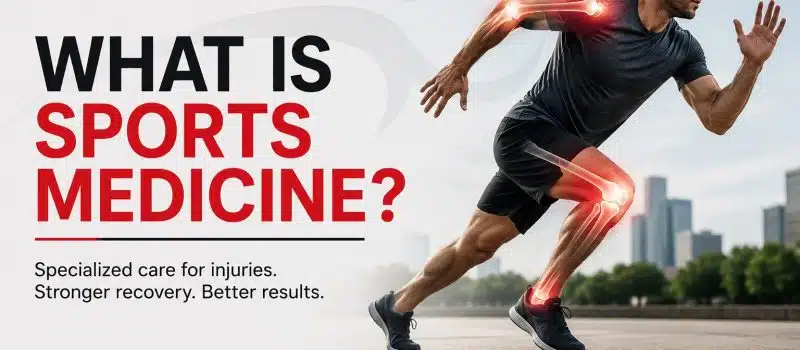
Sports medicine is a branch of orthopedic care focused on helping people prevent, diagnose, treat, and recover from injuries involving the muscles, bones, joints, ligaments, tendons, and cartilage.
Although the name suggests that sports medicine is only for competitive athletes, this type of care can benefit anyone who wants to remain active, recover from an injury, and move with less pain. Patients may include student athletes, recreational runners, golfers, workers with repetitive-motion injuries, or adults who simply want to return to normal daily activities.
What Does a Sports Medicine Specialist Treat?
Sports medicine physicians evaluate a wide range of injuries caused by athletic activity, exercise, overuse, work, and everyday movement.
Common conditions include:
- ACL and other knee ligament injuries
- Meniscus tears
- Rotator cuff injuries
- Shoulder instability and dislocations
- Labral tears
- Elbow and throwing injuries
- Tendon and muscle injuries
- Joint pain caused by overuse
- Cartilage damage
- Sports-related fractures
The goal is not only to identify the source of pain, but also to determine how the injury is affecting strength, stability, mobility, and overall function.
Sports Medicine for Knee Injuries
The knee is especially vulnerable during activities that involve running, jumping, cutting, pivoting, or sudden changes in direction.
Sports medicine specialists commonly diagnose and treat:
- ACL tears
- MCL and PCL injuries
- Meniscus tears
- Patellar instability
- Tendon injuries
- Cartilage damage
A detailed evaluation can help determine whether an injury may improve with rehabilitation or requires surgical treatment to restore joint stability.
Sports Medicine for Shoulder Injuries
The shoulder allows for a wide range of motion, but that flexibility can also make it prone to injury.
Common shoulder conditions include:
- Rotator cuff tears
- Labral injuries
- Shoulder impingement
- Recurrent dislocations
- Shoulder instability
- Overuse injuries
- Arthritis-related pain
These conditions frequently affect athletes involved in baseball, swimming, tennis, weightlifting, and other overhead activities. They may also occur after a fall, work injury, or repetitive strain.
Sports Medicine for Elbow Injuries
Elbow injuries are common among throwing athletes and people who repeatedly grip, lift, or rotate the arm.
Conditions may include:
- UCL injuries
- Tennis elbow
- Golfer’s elbow
- Tendon damage
- Throwing-related instability
- Overuse inflammation
Early evaluation may help prevent a minor injury from becoming a more serious or chronic problem.
What Is the Main Goal of Sports Medicine?
Pain relief is important, but sports medicine treatment goes beyond reducing symptoms.
A complete treatment plan may focus on:
- Restoring movement and flexibility
- Improving strength and joint stability
- Protecting injured tissue during healing
- Correcting movement patterns
- Reducing the risk of reinjury
- Supporting a safe return to sports, work, or exercise
- Preserving long-term joint health
Treatment recommendations are based on the patient’s injury, age, activity level, physical demands, and personal recovery goals.
Can Sports Injuries Be Treated Without Surgery?
Many sports-related and orthopedic injuries can improve without surgery.
Non-surgical treatment may include:
- Temporary activity modification
- Physical therapy
- Strengthening and flexibility exercises
- Bracing or supportive equipment
- Anti-inflammatory medication
- Targeted injections
- A gradual return-to-activity program
A sports medicine specialist may recommend conservative care when the injured tissue can heal properly and joint function can be restored without an operation.
When Is Surgery Considered?
Surgery may be appropriate when an injury causes significant instability, involves a complete tear, does not improve with non-surgical care, or is unlikely to heal properly on its own.
Examples may include:
- Complete ACL tears
- Large rotator cuff tears
- Recurrent shoulder dislocations
- Significant labral injuries
- Complex meniscus tears
- Severe cartilage damage
- Ligament injuries requiring reconstruction
Many orthopedic sports procedures can be performed arthroscopically through small incisions. This minimally invasive approach may allow the surgeon to examine and repair damaged tissue while minimizing disruption to the surrounding area.
The Role of Rehabilitation
Rehabilitation is a major part of sports medicine, whether a patient is treated surgically or non-surgically.
Physical therapy may help patients:
- Regain range of motion
- Rebuild strength
- Improve balance and coordination
- Restore normal movement patterns
- Prepare for sport-specific activities
- Reduce the likelihood of reinjury
A safe recovery often requires gradual progression rather than returning to full activity as soon as pain begins to improve.
Sports Medicine and Injury Prevention
Sports medicine also focuses on preventing injuries before they occur.
Prevention strategies may include:
- Proper warm-up and cooldown routines
- Strength and mobility training
- Sport-specific conditioning
- Appropriate rest and recovery
- Correct equipment and footwear
- Gradual increases in activity
- Evaluation of throwing, running, or movement mechanics
These steps can be especially valuable for young athletes, people returning after an injury, and adults beginning a new fitness routine.
Who Can Benefit from Sports Medicine?
Sports medicine care may be helpful for:
- High school and college athletes
- Competitive and professional athletes
- Recreational runners and cyclists
- Golf, tennis, and pickleball players
- Weightlifters
- Active adults
- Workers with repetitive-use injuries
- People recovering from falls or accidents
- Anyone who wants to return to comfortable movement
A person does not need to participate in organized sports to benefit from specialized orthopedic sports medicine care.
Choosing a Sports Medicine Specialist
Experience is important when evaluating injuries involving complex joints such as the shoulder, knee, and elbow.
A qualified orthopedic sports medicine specialist can assess the injury, review imaging when necessary, explain available treatment options, and develop a recovery plan based on the patient’s goals. The right approach may include conservative treatment, advanced rehabilitation, arthroscopic surgery, or a combination of methods.
Sports medicine is ultimately about helping people return to the activities that matter to them while protecting long-term mobility and joint health.
Frequently Asked Questions
Is sports medicine only for competitive athletes?
No. Sports medicine can help anyone with an injury involving the muscles, bones, joints, ligaments, tendons, or cartilage. Patients may include athletes, active adults, workers, and people injured during everyday activities.
What injuries are commonly treated through sports medicine?
Common injuries include ACL tears, meniscus tears, rotator cuff injuries, shoulder instability, tendon injuries, elbow conditions, cartilage damage, fractures, and overuse injuries.
Does seeing a sports medicine specialist mean I will need surgery?
No. Many injuries can be treated with physical therapy, bracing, activity modification, medication, injections, and rehabilitation. Surgery is considered when it provides the best opportunity to restore stability, function, and long-term joint health.
Follow us on Facebook and Twitter, by Sports Doctor Lubbock, Rotator Cuff Repair, and Shoulder Instability
This article is for general purposes only and should not be considered medical advice. If you have any medical issues or questions, consult your physician.