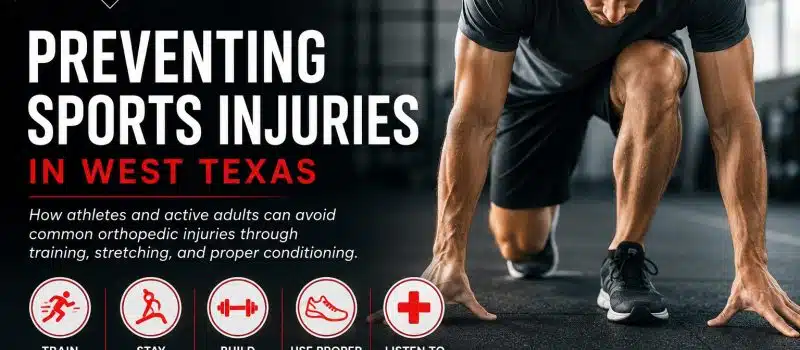
Staying active is one of the best things you can do for your overall health, whether you’re competing in organized sports, training at the gym, running, cycling, golfing, or simply enjoying an active lifestyle. Unfortunately, increased activity can also increase the possibility of orthopedic injuries, particularly when the body isn’t adequately prepared for the demands being placed on it.
For athletes and active adults throughout Lubbock and West Texas, sports injury prevention begins long before stepping onto the field, court, track, or gym floor. Proper conditioning, strength training, flexibility, recovery, and attention to technique can all play an important role in keeping the body prepared for activity. Understanding how injuries happen and taking steps to reduce those risks can help you stay active and continue doing the things you enjoy.
Why Do Sports Injuries Happen?
Some sports injuries happen suddenly and may be difficult to prevent. A collision, awkward landing, unexpected fall, or rapid change in direction can place tremendous stress on the body. Other injuries develop gradually as repetitive movement, inadequate conditioning, sudden increases in training intensity, poor mechanics, muscle imbalances, and insufficient recovery place repeated stress on muscles, tendons, ligaments, bones, and joints.
Common orthopedic injuries among athletes and active adults can involve:
- Knees, including ACL and meniscus injuries
- Shoulders, including rotator cuff injuries and instability
- Ankles, including sprains and ligament injuries
- Elbows, particularly from throwing and repetitive-motion activities
- Hips, including injuries related to repetitive stress or movement
- Muscles and tendons, including strains and overuse conditions
Dr. Kevin Crawford provides orthopedic and sports medicine care for injuries involving many of these areas, including the shoulder, elbow, knee, hip, and ankle.
Build a Strong Foundation Before Increasing Intensity
One of the most important principles of injury prevention is preparing your body for what you’re asking it to do. Someone returning to running after several months away shouldn’t immediately attempt the same distance or pace previously maintained, just as an athlete shouldn’t dramatically increase training volume without allowing the body time to adapt.
A gradual progression allows muscles, joints, tendons, and the cardiovascular system to adjust to increasing demands. Rather than making sudden jumps, gradually increase duration, frequency, resistance, speed, distance, and sport-specific movements. This is particularly important after taking time away because of an injury, illness, offseason, or extended period of inactivity.
Don’t Skip the Warm-Up
It’s tempting to arrive at the gym or athletic field and immediately begin exercising at full intensity, but a proper warm-up helps prepare the body for more demanding movement. Starting with several minutes of lower-intensity activity, such as walking, easy jogging, cycling, or controlled sport-specific movements, can gradually prepare the muscles and joints for exercise.
The purpose of warming up isn’t to exhaust yourself before training. It’s to prepare your body to move efficiently before placing it under greater physical stress.
Make Strength Training Part of Injury Prevention
Strength isn’t only about athletic performance. Strong muscles help support and stabilize joints while allowing the body to better manage forces created during running, jumping, throwing, lifting, and rapid changes in direction.
Depending on your activity, a balanced conditioning program may target:
- Quadriceps and hamstrings
- Glutes and hips
- Core muscles
- Calves and ankles
- Back muscles
- Shoulders and rotator cuff
- Arms and forearms
The goal should be balanced strength rather than concentrating exclusively on the muscles most visibly associated with a particular sport. Strong supporting muscles can help improve stability, movement control, and overall physical conditioning.
Pay Attention to Flexibility and Mobility
Strength without adequate mobility can limit efficient movement. Stretching and mobility exercises can help maintain range of motion and prepare muscles and joints for the movements required during physical activity.
Your flexibility routine should also reflect your activity. A runner may focus more heavily on the hips, hamstrings, calves, and ankles, while baseball, tennis, or volleyball athletes may require additional attention to their shoulders and upper body. Stretching should generally be controlled and comfortable rather than aggressive or painful.
Practice Proper Technique
Conditioning can only accomplish so much if an athlete repeatedly performs movements with poor mechanics. Running stride, throwing mechanics, jumping technique, landing position, weightlifting form, and rapid changes in direction can all affect how forces are distributed throughout the body.
This becomes particularly important with repetitive activities because a relatively small mechanical problem repeated hundreds or thousands of times can gradually place unnecessary stress on muscles, tendons, ligaments, and joints. Coaches, athletic trainers, physical therapists, and other qualified professionals can help identify movement patterns that may need improvement.
Don’t Train the Same Way Every Day
Repetitive stress contributes to many overuse injuries. Athletes sometimes assume that doing more of their primary activity is always the best way to improve, but repeatedly loading the same muscles and joints without adequate recovery can eventually become counterproductive.
Cross-training can introduce different movement patterns while giving heavily used areas additional recovery time. Depending on your sport and goals, a balanced training program might combine strength training, cardiovascular conditioning, mobility work, swimming, cycling, walking, and sport-specific practice.
Give Your Body Time to Recover
Recovery is part of training. Muscles and connective tissues need time to adapt to physical stress, and continually training at high intensity without adequate recovery can contribute to fatigue, declining performance, altered mechanics, and overuse problems.
Rest days don’t necessarily require complete inactivity. Lighter activities, mobility exercises, walking, or other forms of active recovery may be appropriate depending on your conditioning and training program. The important point is recognizing that more training isn’t automatically better training.
Be Careful With Sudden Changes in Activity
Many injuries occur not because an activity is inherently unsafe, but because someone suddenly does much more than their body is accustomed to doing. This is especially common among weekend warriors who spend most of the week relatively inactive and then suddenly spend several hours playing basketball, running, golfing, hiking, or completing a demanding workout.
Your enthusiasm may be ready before your muscles and joints are. If you’re returning to exercise after an extended break, gradually rebuild your conditioning before attempting your previous intensity, duration, or performance level.
Use the Right Equipment
Proper equipment can also play a role in injury prevention. Footwear should be appropriate for the activity and provide suitable support, while protective equipment should fit properly and be used as intended. Athletes should also consider the condition of playing surfaces and equipment because worn footwear, poorly fitted protective gear, damaged equipment, or inappropriate surfaces can introduce unnecessary risks.
Don’t Ignore Pain
Athletes often pride themselves on pushing through discomfort, but there is an important difference between normal fatigue associated with exercise and pain that may indicate an injury. Persistent pain, swelling, instability, weakness, loss of motion, or discomfort that worsens with activity shouldn’t simply be ignored.
Overuse problems can develop gradually when repetitive stress exceeds the body’s ability to recover. Addressing symptoms early may help prevent a relatively manageable problem from becoming more significant.
Know When to See a Sports Medicine Specialist
Not every sore muscle requires an orthopedic evaluation, but certain symptoms deserve closer attention, particularly when they persist or interfere with normal activity. Consider seeking an evaluation if you experience:
- Significant or persistent joint pain
- Swelling that doesn’t improve
- Difficulty comfortably bearing weight
- Joint instability or repeated giving way
- Loss of normal range of motion
- Persistent weakness
- A popping sensation accompanied by immediate pain or swelling
- Pain that repeatedly returns during activity
- An injury preventing a return to normal sports or exercise
A sports medicine specialist can evaluate an injury and determine an appropriate treatment or rehabilitation approach based on the condition, severity, and patient’s goals.
Sports Injury Prevention Is a Long-Term Strategy
There is no way to eliminate every possibility of injury. Sports and physical activity naturally place stress on the body, and unexpected injuries can occur even when an athlete does everything correctly. The goal is to reduce avoidable risks while preparing the body to safely handle the demands of activity.
For athletes and active adults throughout Lubbock and West Texas, good prevention habits include warming up before demanding activity, developing balanced strength, maintaining flexibility and mobility, gradually increasing training intensity, using proper technique, allowing adequate recovery, and paying attention to pain or other warning signs. Taking care of your body today can help you continue participating in the sports and activities you enjoy for years to come.
Sports Medicine and Orthopedic Care in Lubbock, Texas
Dr. Kevin Crawford provides orthopedic and sports medicine care for athletes and active adults in Lubbock and throughout West Texas, with expertise involving sports-related injuries and conditions of the shoulder, knee, elbow, hip, and ankle.
Whether you’re a competitive athlete, student athlete, weekend warrior, or simply someone who wants to remain active, addressing injuries appropriately and maintaining proper conditioning can help protect long-term mobility and joint health.
Frequently Asked Questions About Sports Injury Prevention
What are some of the most common orthopedic sports injuries?
Common sports-related injuries include sprains and strains, ACL injuries, meniscus tears, rotator cuff injuries, shoulder instability, ankle injuries, tendon problems, and other acute or overuse conditions involving muscles, ligaments, tendons, and joints.
Does stretching prevent all sports injuries?
No. Stretching can be one component of an overall conditioning program, but injury prevention also involves strength, mobility, appropriate training progression, technique, recovery, and sport-specific preparation. No training program can completely eliminate injury risk.
When should an athlete see an orthopedic or sports medicine specialist?
Persistent pain, significant swelling, instability, weakness, limited range of motion, difficulty bearing weight, or symptoms that repeatedly return during activity can warrant an evaluation. Sudden or severe injuries should be assessed promptly.
Learn More About Sports Medicine in Lubbock
Athletes and active adults experiencing an injury can learn more about Dr. Crawford’s orthopedic services and sports medicine specialties or explore additional information about sports medicine and common athletic injuries. Learn more about Doctor Crawford and Sports Medicine in Lubbock.
This article is for general educational purposes only and should not be considered medical advice. If you have an injury, medical concern, or questions about participating in physical activity, consult an appropriate healthcare professional.